
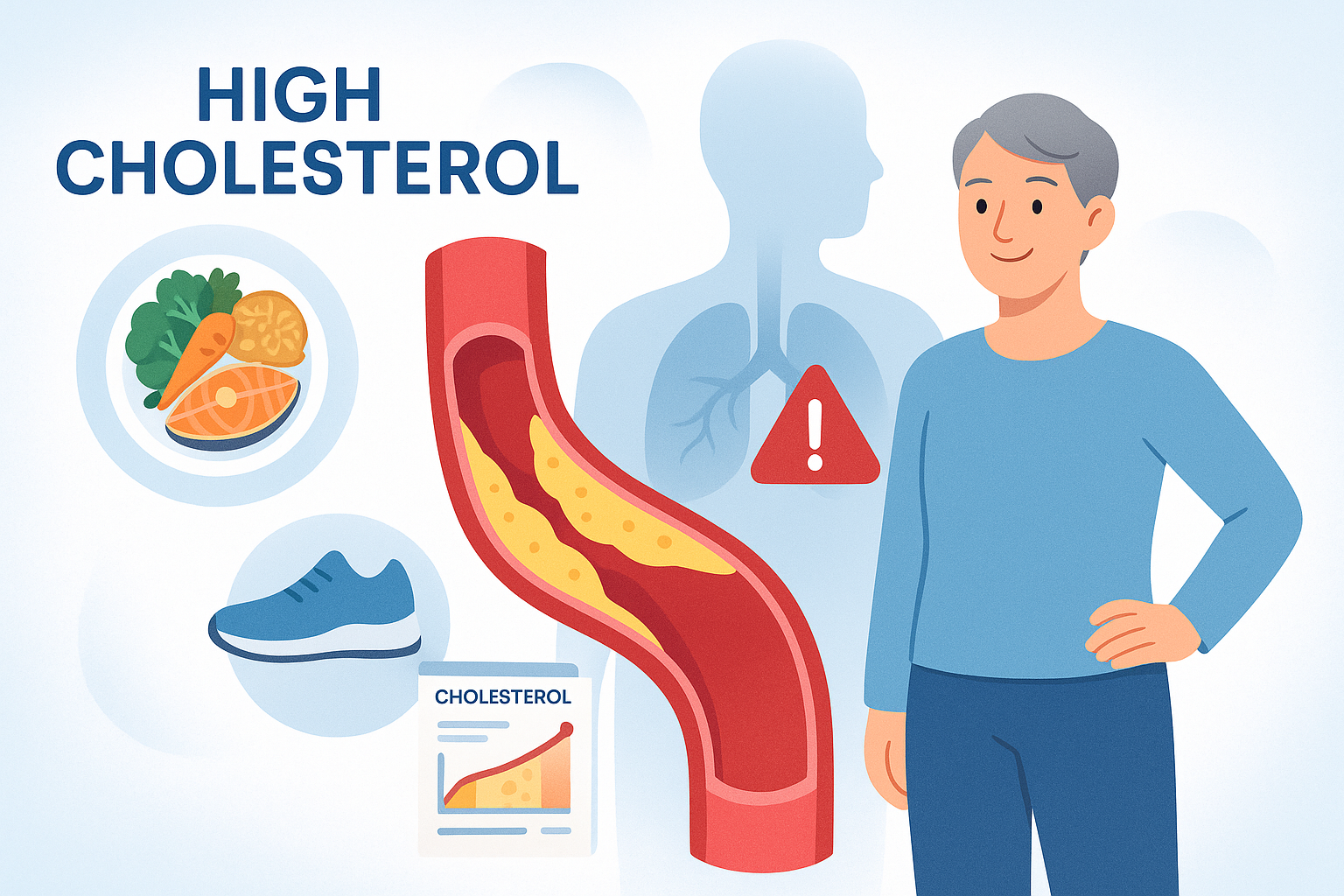
When it comes to your health, some risks hide in plain sight—cholesterol is one of them. High cholesterol doesn’t come with warning signs or symptoms. You won’t feel sick or notice anything unusual. But silently, it can increase your risk for serious health issues like heart attacks and strokes.
Where Does Cholesterol Come From?
Cholesterol comes from two sources: your body (mainly produced in the liver) and your diet (particularly animal based fatty products and highly processed food). While dietary cholesterol has less impact on blood levels than once believed, saturated fats and trans fats in food can still raise LDL (“bad”) cholesterol significantly. That’s why healthy eating habits are key in managing cholesterol levels.
The Hidden Risk of High Cholesterol
When the levels of LDL (low-density lipoprotein, often called “bad” cholesterol) are too high, it can lead to plaque buildup in the arteries. Over time, this narrows the arteries and restricts blood flow, a condition known as atherosclerosis.
What’s most concerning is that this process happens without symptoms. You won’t feel your cholesterol rising, but the consequences can be sudden and life-threatening. That’s why regular cholesterol checks are so important—even if you feel completely healthy.
Prevention Starts with Awareness
Because high cholesterol doesn’t make you feel sick, the only way to know your levels is through a blood test. Based on the results, your doctor can help you determine whether your cholesterol is within a healthy range or if it needs to be lowered.
Lifestyle Changes and Medication: A Combined Approach
Lowering high cholesterol often starts with lifestyle changes:
- Eating a healthy diet: More fiber, less saturated fat
- Regular physical acitivity: At least 30 minutes most days
- Avoiding tobacco and limiting alcohol
- Maintaining a healthy weight
However, for many people, lifestyle changes alone aren’t enough, especially if there are additional risk factors or a family history of heart disease. In these cases, cholesterol-lowering medications may be recommended to help reduce your risk.
Personalized Targets Based on Your Risk
Not everyone should aim for the same cholesterol numbers. Your ideal cholesterol levels depend on your individual risk factors such as age, family history, smoking status, blood pressure, and the presence of chronic conditions like diabetes, kidney disease, heart or vascular disease.
That’s why healthcare providers often use risk calculators or guidelines to tailor cholesterol targets for each person. For those with a high risk of cardiovascular disease, stricter targets and more aggressive treatments may be necessary.
Take Charge of Your Health
The bottom line: high cholesterol is a silent threat—but one you can do something about. Regular check-ups, a healthy lifestyle, and following your doctor’s advice on medication can all play a role in protecting your body for the long haul.
Don’t wait for symptoms. Get your cholesterol checked and talk to your healthcare provider about what your numbers mean for you.
Comments are closed.